

Popular Products
-
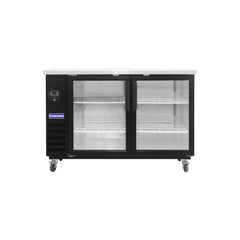 Polarman PLM-BC3-24G 61" Black Glass Door Back Bar Refrigerator with LED Lighting
$1,549.00
Polarman PLM-BC3-24G 61" Black Glass Door Back Bar Refrigerator with LED Lighting
$1,549.00
-
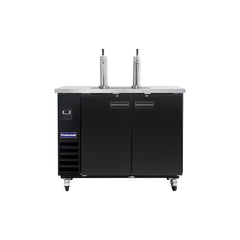 Polarman PLM-BCBD2-2 49 1/8" Dual Single-Tap Kegerator Beer Dispenser with 2 Solid Doors, 12.5 cu. ft.
$1,899.00
Polarman PLM-BCBD2-2 49 1/8" Dual Single-Tap Kegerator Beer Dispenser with 2 Solid Doors, 12.5 cu. ft.
$1,899.00
-
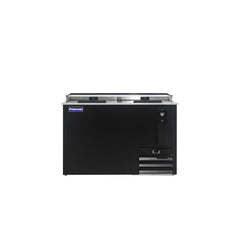 Polarman PLM-B50A 49 7/16" Black Horizontal Bottle Cooler
$1,399.00
Polarman PLM-B50A 49 7/16" Black Horizontal Bottle Cooler
$1,399.00
-
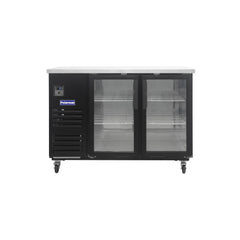 Polarman PLM-BC-2G 58 3/4" Black Glass Door Back Bar Refrigerator with LED Lighting
$1,499.00
Polarman PLM-BC-2G 58 3/4" Black Glass Door Back Bar Refrigerator with LED Lighting
$1,499.00
-
 Polarman PLM-BCBD4-2 73 1/16" Dual Double-Tap Kegerator Beer Dispenser with 3 Solid Doors, 20.8 cu. ft.
$2,499.00
Polarman PLM-BCBD4-2 73 1/16" Dual Double-Tap Kegerator Beer Dispenser with 3 Solid Doors, 20.8 cu. ft.
$2,499.00
-
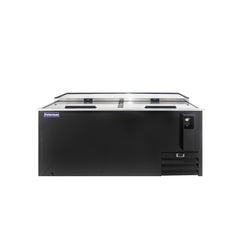 Polarman PLM-B65A 64 5/16" Black Horizontal Bottle Cooler
$1,599.00
Polarman PLM-B65A 64 5/16" Black Horizontal Bottle Cooler
$1,599.00


 Sold out
Polarman
Polarman PLM-B36A 36 13/16" Black Horizontal Bottle Cooler
Sale price $1,299.00 Regular price $2,000.00Unit priceFree Shipping


 Sold out
Polarman
Polarman PLM-B50A 49 7/16" Black Horizontal Bottle Cooler
Sale price $1,399.00 Regular price $2,100.00Unit priceFree Shipping


 Sold out
Polarman
Polarman PLM-B65A 64 5/16" Black Horizontal Bottle Cooler
Sale price $1,599.00 Regular price $2,300.00Unit priceFree Shipping


 Sold out
Polarman
Polarman PLM-B95A 95 5/16" Black Horizontal Bottle Cooler
Sale price $2,499.00 Regular price $3,200.00Unit priceFree Shipping


 Sold out
Polarman
Polarman PLM-BC2-24 49" Black Solid Door Back Bar Refrigerator with LED Lighting
Sale price $1,499.00 Regular price $2,200.00Unit priceFree Shipping


Polarman
Polarman PLM-BC3-24 61" Black Solid Door Back Bar Refrigerator with LED Lighting
Sale price $1,599.00 Regular price $2,300.00Unit priceFree Shipping


Polarman
Polarman PLM-BC4-24 73" Black Solid Door Back Bar Refrigerator with LED Lighting
Sale price $2,199.00 Regular price $2,900.00Unit priceFree Shipping


Polarman
Polarman PLM-BC2-24G 49" Black Glass Door Back Bar Refrigerator with LED Lighting
Sale price $1,399.00 Regular price $2,100.00Unit priceFree Shipping


Polarman
Polarman PLM-BC3-24G 61" Black Glass Door Back Bar Refrigerator with LED Lighting
Sale price $1,549.00 Regular price $2,200.00Unit priceFree Shipping


Polarman
Polarman PLM-BC4-24G 73" Black Glass Door Back Bar Refrigerator with LED Lighting
Sale price $2,099.00 Regular price $2,900.00Unit priceFree Shipping


Polarman
Polarman PLM-BC2-24SD 49" Black Glass Door Back Bar Refrigerator with LED Lighting
Sale price $1,399.00 Regular price $2,100.00Unit priceFree Shipping


Polarman
Polarman PLM-BC3-24SD 61" Black Glass Door Back Bar Refrigerator with LED Lighting
Sale price $1,549.00 Regular price $2,200.00Unit priceFree Shipping


 Sold out
Polarman
Polarman PLM-BC-2 58 3/4" Black Solid Door Back Bar Refrigerator with LED Lighting
Sale price $1,599.00 Regular price $2,300.00Unit priceFree Shipping


Polarman
Polarman PLM-BC-3 69" Black Solid Door Back Bar Refrigerator with LED Lighting
Sale price $2,099.00 Regular price $2,800.00Unit priceFree Shipping


Polarman
Polarman PLM-BC-4 90 3/8" Black Solid Door Back Bar Refrigerator with LED Lighting
Sale price $2,699.00 Regular price $3,400.00Unit priceFree Shipping


Polarman
Polarman PLM-BC-2G 58 3/4" Black Glass Door Back Bar Refrigerator with LED Lighting
Sale price $1,499.00 Regular price $2,200.00Unit priceFree Shipping


Polarman
Polarman PLM-BC-3G 69" Black Glass Door Back Bar Refrigerator with LED Lighting
Sale price $1,899.00 Regular price $2,600.00Unit priceFree Shipping


Polarman
Polarman PLM-BC-4G 90 3/8" Black Glass Door Back Bar Refrigerator with LED Lighting
Sale price $2,599.00 Regular price $3,300.00Unit priceFree Shipping


Polarman
Polarman PLM-BCBD1 24 1/8" Single Tap Kegerator Beer Dispenser with 1 Solid Door, 8.1 cu. ft.
Sale price $1,299.00 Regular price $2,300.00Unit priceFree Shipping


Polarman
Polarman PLM-BCBD2-1 49 1/8" Double Tap Kegerator Beer Dispenser with 2 Solid Doors, 12.5 cu. ft.
Sale price $1,499.00 Regular price $2,400.00Unit priceFree Shipping


Polarman
Sale price $1,899.00 Regular price $2,600.00Unit priceFree Shipping


Polarman
Polarman PLM-BCBD3-1 61 1/16" Double Tap Kegerator Beer Dispenser with 2 Solid Doors, 16.6 cu. ft.
Sale price $1,999.00 Regular price $2,700.00Unit priceFree Shipping


Polarman
Sale price $2,199.00 Regular price $2,700.00Unit priceFree Shipping


Polarman
Sale price $2,499.00 Regular price $3,200.00Unit priceFree Shipping
Everest
Everest EBD2-BB-24 57 3/4" Direct Draw Keg Refrigerator with 2 Solid Doors, 17 cu. ft.
Regular price $3,696.00Unit priceFree Shipping
Everest
Everest EBD3-BB-24 68" Direct Draw Keg Refrigerator, 2 Solid Doors, 20 cu. ft.
Regular price $3,968.00Unit priceFree Shipping
Everest
Everest EBDS2-BB-24 49" Direct Draw Keg Refrigerator, 2 Solid Doors, 13 cu. ft.
Regular price $3,529.00Unit priceFree Shipping
Everest
Everest EBB48-24 49" Back Bar Cooler, 2 Solid Doors, 13 cu. ft.
Regular price $2,742.00Unit priceFree Shipping
Everest
Everest EBB59-24 57 3/4" Back Bar Cooler, 2 Solid Doors, 17 cu. ft.
Regular price $2,942.00Unit priceFree Shipping
Everest
Everest EBB69-24 68" Back Bar Cooler, 2 Solid Doors, 20 cu. ft.
Regular price $3,232.00Unit priceFree Shipping


Commercial Bar Refrigeration Buying Guide
A working bar needs cold in three different places, and the three cabinets that do it are not interchangeable — they differ in height, in which direction the bartender reaches, and in where the compressor needs air. Get those three right and the bar works; get them wrong and someone walks to the walk-in every twenty minutes.
Back bar coolers
Upright cabinets along the back wall, top doubling as a work surface, reached from the front. This is the bulk of your bottle and can storage. Two depth classes — a shallow 24 7/16" and a standard 27 5/8" — and solid, glass or sliding glass doors. Shop back bar coolers → · buying guide
Kegerators and beer dispensers
Kegs inside the cabinet the faucets are mounted on, with the tower coming up through or beside the bar top. One to four faucets, single or dual tower — and the tower layout, not the faucet count, is what decides whether two bartenders can pour at once. Shop commercial kegerators → · buying guide
Horizontal bottle coolers
Low chests with sliding lids that sit under the bar rail and are reached from above, not in front. Fastest possible grab for bottled beer during a rush, because there is no door to swing and nothing to bend into. Shop horizontal bottle coolers →
Undercounter refrigerators
Not strictly bar equipment, but most bars end up with one for garnish, citrus, dairy and mixers at the service well. 35 1/2" tall to slide under a standard counter. Shop undercounter refrigerators → · buying guide
How the three fit one bar
The useful way to lay out bar refrigeration is by height, reach direction and where the compressor needs air — not by capacity. Our own Polarman line, read that way:
| Cabinet | Height | Depth | Reached | Compressor | Where it goes |
|---|---|---|---|---|---|
| Horizontal bottle cooler | 35" | 27" | From above — sliding lids | Bottom | Under the bar rail |
| Back bar cooler (shallow) | — | 24 7/16" | From the front — doors | Side | Against the back wall |
| Back bar cooler (standard) | 42 1/2" | 27 5/8" | From the front — doors | Side | Against the back wall |
| Kegerator | 51" with tower | 24 7/16" | Doors below, tower above | Left side | Back wall, tower through the bar top |
Three consequences worth planning around:
- The bottle cooler is the only one you reach downward into, which is why it is the fastest cabinet on the bar during a rush and why it goes under the rail rather than against the wall.
- It is also the only one with a bottom-mounted compressor, so it needs air and service access at floor level at the front — you cannot box it in behind a kick panel. The back bar cabinets and kegerators are side-mounted and can sit tight against the back wall instead.
- A kegerator does not tuck under anything. At 51 inches overall the tower comes up through or beside the bar surface, so the cut-out has to be planned with the bar, not after it.
Plan the depth budget once
Measure the back run from the wall to the edge of the walkway, then subtract the space a bartender needs to pass behind a colleague. That single number decides which back bar line you can use — and because our kegerators are built on the same shallow cabinet as our back bar coolers (49 1/8", 61 1/16" and 73 1/16" wide, all 24 7/16" deep, with the same 12.5, 16.6 and 20.8 cu ft), it is one number for both. They sit flush next to each other along the back run with no step and no gap.
If depth is tight but you have bar length, the shallow line costs almost nothing: 2 1/4 inches more length buys back 3 3/16 inches of depth with no capacity loss.
The Polarman bar line at a glance
All 115 V / single phase, R290, 33–41°F. One system, three jobs.
| Model | Type | Width | Depth | Capacity | Weight |
|---|---|---|---|---|---|
| PLM-B36A | Bottle cooler | 36 13/16" | 27" | 10 cu ft | 249 lb |
| PLM-B50A | Bottle cooler | 49 7/16" | 27" | 13.5 cu ft | 309 lb |
| PLM-B65A | Bottle cooler | 64 5/16" | 27" | 17.2 cu ft | 353 lb |
| PLM-B95A | Bottle cooler | 95 5/16" | 27" | 26 cu ft | 439 lb |
| PLM-BC2-24 / 24G / 24SD | Back bar, shallow | 49" | 24 7/16" | 12.5 cu ft | 263–307 lb |
| PLM-BC3-24 / 24G / 24SD | Back bar, shallow | 61" | 24 7/16" | 16.6 cu ft | 300–357 lb |
| PLM-BC4-24 / 24G | Back bar, shallow | 73" | 24 7/16" | 20.8 cu ft | 349–417 lb |
| PLM-BC-2 / 2G | Back bar, standard | 58 3/4" | 27 5/8" | 16.2 cu ft | 302–353 lb |
| PLM-BC-3 / 3G | Back bar, standard | 69" | 27 5/8" | 20.4 cu ft | 355–395 lb |
| PLM-BC-4 / 4G | Back bar, standard | 90 3/8" | 27 5/8" | 29.1 cu ft | 412–474 lb |
| PLM-BCBD1 | Kegerator, 1 faucet | 24 1/8" | 29 15/16" | 8.1 cu ft | 161 lb |
| PLM-BCBD2-1 / 2-2 | Kegerator, 2 faucets | 49 1/8" | 24 7/16" | 12.5 cu ft | 237 lb |
| PLM-BCBD3-1 / 3-2 | Kegerator, 2 faucets | 61 1/16" | 24 7/16" | 16.6 cu ft | 270 lb |
| PLM-BCBD4-2 | Kegerator, 4 faucets | 73 1/16" | 24 7/16" | 20.8 cu ft | 349 lb |
Every cabinet carries 1 year labour, 2 years parts and 5 years on the compressor part.
Commercial bar refrigeration FAQ
What refrigeration does a bar actually need?
Three things in three places. A back bar cooler against the back wall for the bulk of the bottles and cans, reached from the front. A horizontal bottle cooler under the bar rail for the fastest grab during a rush, reached from above. A kegerator if you pour draft, with the tower coming up through the bar top. Most bars add an undercounter refrigerator at the service well for garnish, citrus and dairy.
What is the difference between a back bar cooler and a bottle cooler?
Orientation and where they sit. A back bar cooler is an upright cabinet against the back wall with doors you open from the front, and its top is a work surface. A horizontal bottle cooler is a low chest — ours are 35 inches tall — with sliding lids on top, sitting under the bar rail so the bartender reaches down into it. The bottle cooler is faster in service; the back bar cooler holds more and shows product if you buy glass doors.
Can a kegerator sit next to a back bar cooler?
In our line they line up exactly. The kegerators are built on the same shallow cabinet as the back bar coolers — 49 1/8, 61 1/16 and 73 1/16 inches wide, all 24 7/16 inches deep, with the same 12.5, 16.6 and 20.8 cu ft — so the two sit flush along the back run with no step and no gap, and you plan one depth budget for both.
How much space do I need behind the bar?
Measure the back run from the wall to the edge of the walkway, then subtract what a bartender needs to pass behind a colleague. What is left is your depth budget, and it decides which cabinets you can use before capacity enters the conversation. If depth is tight but you have bar length, our shallow back bar line costs almost nothing: 2 1/4 inches more length buys back 3 3/16 inches of depth with no capacity loss.
Where does the compressor need air?
It depends on the cabinet, and it decides what you can box in. Our horizontal bottle coolers are bottom-mounted, so they need air and service access at floor level at the front and cannot be closed in behind a kick panel. Back bar coolers and kegerators are side-mounted, so they can sit tight against the back wall but need one side reachable for service.
Does bar refrigeration need special circuits?
No. Every Polarman bar cabinet — bottle cooler, back bar cooler and kegerator alike — runs on standard 115 V, single phase, drawing 1.8 to 3 amps. Give each one its own circuit rather than sharing with the blender and the POS, and size each branch off the data plate at the margin your local code requires.
Is commercial bar refrigeration different from a home bar fridge?
Completely. Commercial cabinets are NSF listed, hold temperature with doors opening hundreds of times a night in a warm crowded room, lock because there is inventory inside, and are built to be pulled out and cleaned under. A residential bar fridge or beverage centre is built for a room at 70F with the door opened a few times an evening; behind a working bar it runs continuously, stops holding temperature by the second summer, and in most jurisdictions will not pass inspection.