
Popular Products
-
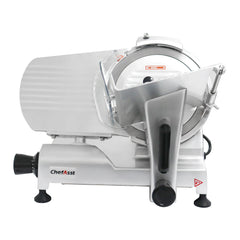 ChefAsst HBS-300 Heavy-Duty Meat Slicer with 12" Stainless Steel Blade - 110V
$479.00
-
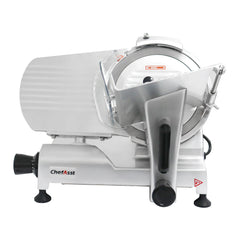 ChefAsst HBS-250 Heavy-Duty Meat Slicer with 10" Stainless Steel Blade - 110V
$434.00
-
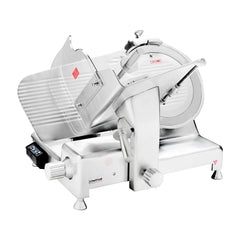 ChefAsst HBS-350 Heavy-Duty Meat Slicer with 14" Stainless Steel Blade - 110V
$1,299.00
-
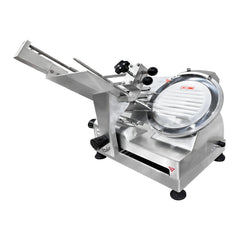 ChefAsst HB-300D Heavy-Duty Automatic Meat Slicer with 11.8" Stainless Steel Blade
$2,099.00
-
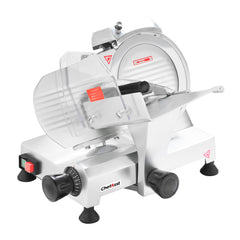 ChefAsst HBS-220JS Heavy-Duty Meat Slicer with 9" Stainless Steel Blade - 110V
$399.00
-
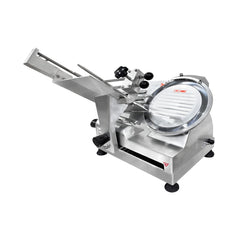 ChefAsst HB-250D Heavy-Duty Automatic Meat Slicer with 9.8" Stainless Steel Blade
$1,999.00

ChefAsst
ChefAsst HBS-195JS Heavy-Duty Meat Slicer with 8" Stainless Steel Blade - 110V
Sale price $349.00 Regular price $449.00Unit priceFree Shipping
ChefAsst
ChefAsst HBS-220JS Heavy-Duty Meat Slicer with 9" Stainless Steel Blade - 110V
Sale price $399.00 Regular price $499.00Unit priceFree Shipping


ChefAsst
ChefAsst HBS-250 Heavy-Duty Meat Slicer with 10" Stainless Steel Blade - 110V
Sale price $434.00 Regular price $534.00Unit priceFree Shipping


ChefAsst
ChefAsst HBS-300 Heavy-Duty Meat Slicer with 12" Stainless Steel Blade - 110V
Sale price $479.00 Regular price $579.00Unit priceFree Shipping
ChefAsst
ChefAsst HBS-350 Heavy-Duty Meat Slicer with 14" Stainless Steel Blade - 110V
Sale price $1,299.00 Regular price $1,599.00Unit priceFree Shipping


ChefAsst
ChefAsst HBS-220A Heavy-Duty Meat Slicer with 9" Stainless Steel Blade - 110V
Sale price $349.00 Regular price $449.00Unit priceFree Shipping


ChefAsst
ChefAsst HBS-250A Heavy-Duty Meat Slicer with 10" Stainless Steel Blade - 110V
Sale price $399.00 Regular price $499.00Unit priceFree Shipping


ChefAsst
ChefAsst HBS-300A Heavy-Duty Meat Slicer with 12" Stainless Steel Blade - 110V
Sale price $469.00 Regular price $569.00Unit priceFree Shipping
ChefAsst
ChefAsst HB-320 Heavy-Duty Automatic Meat Slicer with 12.6" Stainless Steel Blade
Sale price $2,599.00 Regular price $3,200.00Unit priceFree Shipping


ChefAsst
ChefAsst HB-350 Heavy-Duty Automatic Meat Slicer with 14.2" Stainless Steel Blade
Sale price $3,999.00 Regular price $4,999.00Unit priceFree Shipping

ChefAsst
ChefAsst HB-250D Heavy-Duty Automatic Meat Slicer with 9.8" Stainless Steel Blade
Sale price $1,999.00 Regular price $2,500.00Unit priceFree Shipping

ChefAsst
ChefAsst HB-300D Heavy-Duty Automatic Meat Slicer with 11.8" Stainless Steel Blade
Sale price $2,099.00 Regular price $2,599.00Unit priceFree Shipping


ChefAsst
ChefAsst HB-320D Heavy-Duty Automatic Meat Slicer with 12.6" Stainless Steel Blade
Sale price $2,399.00 Regular price $2,999.00Unit priceFree Shipping


Commercial Meat Slicer Buying Guide
Manual slicers
The operator moves the carriage; the machine spins the blade. Lighter, cheaper, faster to break down and clean, and the right choice when slicing is a batch job rather than a full-time station. Our own ChefAsst HBS series runs 8" to 14" blades, all on standard 110V. Shop manual meat slicers →
Automatic slicers
A motor drives the carriage while the operator loads and collects — the machine does the repetitive stroke, so slices stay uniform through a long prep list. ChefAsst HB series, 9.8" to 14.2" blades. Heavier and larger than a manual of the same blade size. Shop automatic meat slicers →
Other food prep
For dicing and shredding rather than slicing, see food processors and cutters and slicers; for grinding, meat grinders.
How to choose a meat slicer
- Blade diameter first. It sets the maximum product size and how hard the motor works. 8–9" for a café or food truck, 10" for most restaurants and small delis, 12" for a real lunch rush, 14" for high-volume deli counters.
- Then check your volume. Slicers are classed by pounds a day as much as by blade: 25–50 lb is light duty, 50–100 lb medium, 100 lb and up heavy. Real output is lower than people assume — 8–15 lb an hour on a small manual machine.
- Check the bench before sizing up. The 12"→14" jump more than doubles weight (56 lb to 141 lb) and adds nearly ten inches of width.
- Manual or automatic. Batch prep once or twice a day → manual. Someone at the slicer through service → automatic pays for itself in labour and consistency.
- Gear or belt drive. Belt is quieter, simpler and cheaper to maintain — right for deli meat and soft-to-medium cheese. Gear has more torque for hard cheese and dense product.
- Never run it more than three hours straight. After three hours of continuous slicing, shut down and let the motor cool for 30 minutes. If your volume needs more than that in one stretch, split prep into two batches or run two machines. Full slicer buying guide →
Sizing by volume
Slicers are classed by pounds a day and hours a day, and the two track together. Real-world output is lower than people expect: a small manual slicer does 8–15 lb an hour, a 12" machine 25–40.
| Class | Per day | Hours/day | Output | Blade | ChefAsst |
|---|---|---|---|---|---|
| Light duty | 25–50 lb | Up to 2 hr | 8–15 lb/hr | 8"–10" | HBS-195JS, HBS-220JS, HBS-220A, HBS-250 |
| Medium duty | 50–100 lb | 2–4 hr | 15–25 lb/hr | 10"–12" | HBS-250A, HBS-300, HBS-300A, HB-250D |
| Heavy duty | 100 lb + | 4 hr + | 25–40 lb/hr | 12"–14" | HBS-350, HB-300D, HB-320D, HB-350 |
You order meat every week, so read the number off the invoice rather than guessing — weekly weight of everything sliced in-house, divided by the days you are open:
| Per week | Per day (6 days) | What to buy |
|---|---|---|
| Under 150 lb | Under 25 lb | 8–9" manual — HBS-195JS, HBS-220JS, HBS-220A |
| 150–300 lb | 25–50 lb | 10" manual — HBS-250, HBS-250A |
| 300–600 lb | 50–100 lb | 12" manual (HBS-300/300A) or 9.8" automatic (HB-250D) |
| 600–900 lb | 100–150 lb | 14" HBS-350, or 11.8–12.6" automatic (HB-300D, HB-320D) |
| 900 lb + | 150 lb + | Two slicers — see below |
Past 150 lb a day, buy two machines — not a bigger one
150 lb at a heavy machine's 25–40 lb/hr is already four to six hours on the blade, and nothing should run more than three hours without a cool-down. A bigger machine does not fix that — a 14" slicer still has one motor and one operator. Two 12" machines do:
- Neither one passes three hours. Split the prep list and both stay inside their duty cycle, so both last years longer.
- Raw and ready-to-eat stay separated. One machine for deli meat and cheese, one for raw — the biggest cross-contamination risk in the prep area, gone, along with the four-hour changeover breakdown.
- You are never down. One machine cleaning or being serviced, the other keeps service running.
- Two 12" machines usually cost less than one production slicer and move far more product inside a safe duty cycle.
Already at 100–150 lb a day and slicing both raw and ready-to-eat product? A second machine is the better buy now. Call +1 (888) 717-8999 and we will spec the pair.
Keeping it running
- Clean every four hours. Full breakdown, wash, rinse and sanitize — and always between raw and ready-to-eat product. Dial to zero and unplug before any disassembly.
- Lubricate monthly and after every deep clean. Use an NSF H1 food-grade lubricant — white mineral oil or H1 grease. Never vegetable, olive or any cooking oil: they oxidize into a sticky varnish that welds the carriage to the slide rod. Oil the carriage and gauge-plate slide rods, not the blade or product table.
- Sharpen on a schedule — every 2–3 days at 100 lb a day and up, weekly at 50–100 lb, every two weeks under 50 lb. A dull blade tears product and makes the operator push harder, which is both the safety risk and the motor risk.
- Three hours on, 30 minutes off. Build the cool-down into the prep schedule; a cook finishing a list will run it straight through otherwise.
ChefAsst meat slicers at a glance
| Model | Type | Blade | Motor | W × D × H | Weight |
|---|---|---|---|---|---|
| HBS-195JS | Manual | 8" | 120 W · 1/6 HP | 20 1/2" × 16 1/2" × 15" | 32 lb |
| HBS-220JS | Manual | 9" | 120 W · 1/6 HP | 20 1/2" × 16 1/2" × 15" | 32 lb |
| HBS-220A | Manual | 9" | 120 W | 22 3/5" × 18 3/10" × 16 3/10" | 37 lb |
| HBS-250 | Manual | 10" | 150 W · 1/4 HP | 22 3/5" × 18 3/10" × 16 3/10" | 41 lb |
| HBS-250A | Manual | 10" | 150 W | 22 3/5" × 18 3/10" × 16 3/10" | 39 lb |
| HBS-300 | Manual | 12" | 250 W | 24 1/5" × 21 1/10" × 19 9/10" | 56 lb |
| HBS-300A | Manual | 12" | 250 W | 24 3/10" × 20 7/10" × 20 1/10" | 54 lb |
| HBS-350 | Manual | 14" | 400 W | 33 7/10" × 28 1/2" × 27 1/5" | 141 lb |
| HB-250D | Automatic | 9.8" | 370 W | 20 1/5" × 19 1/5" × 20 1/2" | 88 lb |
| HB-300D | Automatic | 11.8" | 600 W | 26 7/10" × 26 2/5" × 32 2/5" | 118 lb |
| HB-320D | Automatic | 12.6" | — | 26" × 22 1/2" × 26" | 160 lb |
| HB-320 | Automatic | 12.6" | — | 26 2/5" × 32 7/10" × 35 4/5" | 227 lb |
| HB-350 | Automatic | 14.2" | — | 44 1/10" × 32 9/10" × 65" | 581 lb |
All ChefAsst slicers: 110V single phase, stainless steel construction, 1-year warranty, free shipping in the continental US. Globe and Waring models are also stocked.
Commercial meat slicer FAQ
What size blade do I need on a meat slicer?
8–9" for a café, sandwich station or food truck slicing a few pounds a day; 10" for most independent restaurants and small delis; 12" for a sandwich shop with a real lunch rush or larger roasts and cheese blocks; 14" for high-volume deli counters and production.
How long can you run a commercial meat slicer continuously?
No more than three hours. After three hours of continuous slicing, shut the machine off and let the motor cool for at least 30 minutes. The motor in a countertop slicer is air-cooled and built for intermittent duty — running it straight through overheats the windings and dries the bearings. Separately, slicers are rated by total hours per day: light duty up to 2 hours, medium duty 2–4, heavy duty 4 and up. A heavy-duty machine can do six hours a day, but as three hours, a break, then three more.
How many pounds a day can one slicer handle?
Slicers are classed by pounds a day: light duty 25–50 lb (up to 2 hours, 8–15 lb/hr), medium duty 50–100 lb (2–4 hours, 15–25 lb/hr), heavy duty 100 lb and up (4 hours plus, 25–40 lb/hr). One countertop machine tops out around 150 lb a day — past that you are asking for more than three unbroken hours at the blade, so run two slicers instead of one bigger one. Read your weekly meat invoice and divide by the days you are open — 900 lb a week and up means two machines, which also gives you raw/ready-to-eat separation and a spare when one is down.
What oil should you use on a meat slicer?
An NSF H1 food-grade lubricant — a white mineral oil or H1 grease, cleared for incidental food contact under 21 CFR 178.3570. Never vegetable oil, olive oil or any cooking oil: they oxidize and polymerize into a sticky varnish that binds the carriage to the slide rod and has to be stripped with solvent. Oil the carriage and gauge-plate slide rods monthly and after every deep clean, and never the blade, blade guard or product table.
What is the difference between a manual and an automatic meat slicer?
On a manual slicer the operator pushes the carriage back and forth by hand. On an automatic, a motor drives the carriage while the operator loads and collects. Automatics keep slices uniform through long prep runs but are heavier, larger and cost more — a 9.8" automatic at 88 lb already outweighs a 12" manual at 56 lb.
Gear driven or belt driven?
Belt driven is quieter, simpler and cheaper to maintain, and the belt slips rather than stalling the motor if the blade binds — right for deli meats and soft-to-medium cheese. Gear driven has more torque and holds blade speed in hard cheese and dense product, at the cost of more parts and more noise.
How often should a meat slicer be cleaned?
Break the slicer down and wash, rinse and sanitize every four hours of continuous use, and always between raw and ready-to-eat product. A wipe of the blade is not enough — product reaches seams a cloth cannot, which is why slicers are a listeria risk.
Are commercial meat slicers dangerous?
They cause more kitchen injuries than almost any other machine, and nearly always during cleaning rather than slicing. Always return the thickness dial to zero and unplug the unit before disassembly, use the end weight on every pass, and wear cut-resistant gloves for cleaning. In most US jurisdictions workers under 18 may not operate power-driven slicers.
Can a meat slicer cut cheese?
Yes, but cheese is much harder on a slicer than meat — it loads the motor and sticks to the blade. For daily cheese slicing choose a gear-driven machine, a 10" blade or larger, and expect to clean the blade more often.