

Popular Products
-
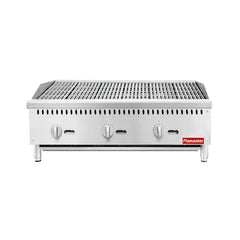 Flamaster FLM-CB36-M 36" Countertop Gas Charbroiler, NG/LPG, 105,000 BTU, 3 Burners
$899.00
-
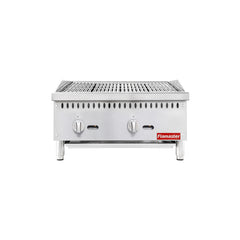 Flamaster FLM-CB24-M 24" Countertop Gas Charbroiler, NG/LPG, 70,000 BTU, 2 Burners
$679.00
-
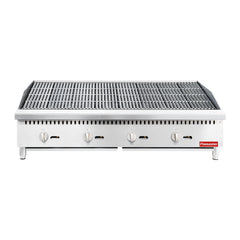 Flamaster FLM-CB48-M 48" Countertop Gas Charbroiler, NG/LPG, 140,000 BTU, 4 Burners
$1,149.00
-
 Flamaster FLM-CB12-M 12" Countertop Gas Charbroiler, NG/LPG, 35,000 BTU, 1 Burner
$399.00
-
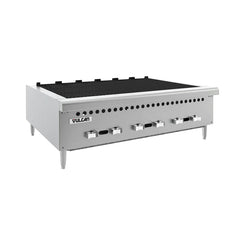 Vulcan VCRB36 Natural Gas 36" Low Profile Radiant Charbroiler - 87,000 BTU
$3,329.00
-
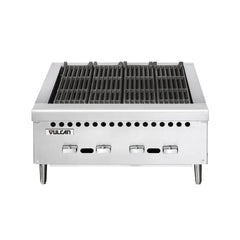 Vulcan VCRB25 Natural Gas 25" Low Profile Radiant Charbroiler - 58,000 BTU
$2,598.00


 Sold out
Flamaster
Flamaster FLM-CB12-M 12" Countertop Gas Charbroiler, NG/LPG, 35,000 BTU, 1 Burner
Sale price $399.00 Regular price $899.00Unit priceFree Shipping


Flamaster
Flamaster FLM-CB24-M 24" Countertop Gas Charbroiler, NG/LPG, 70,000 BTU, 2 Burners
Sale price $679.00 Regular price $999.00Unit priceFree Shipping


 Sold out
Flamaster
Flamaster FLM-CB36-M 36" Countertop Gas Charbroiler, NG/LPG, 105,000 BTU, 3 Burners
Sale price $899.00 Regular price $1,099.00Unit priceFree Shipping


Flamaster
Flamaster FLM-CB48-M 48" Countertop Gas Charbroiler, NG/LPG, 140,000 BTU, 4 Burners
Sale price $1,149.00 Regular price $1,500.00Unit priceFree Shipping
Vulcan
Vulcan VCRB25 Natural Gas 25" Low Profile Radiant Charbroiler - 58,000 BTU
Regular price $2,598.00Unit price
Vulcan
Vulcan VCRB36 Natural Gas 36" Low Profile Radiant Charbroiler - 87,000 BTU
Regular price $3,329.00Unit price


Commercial Charbroiler Buying Guide
A charbroiler cooks over open grates with flame below, which is what puts grill marks and char on a steak, a chicken breast or a vegetable. That is the one thing a flat griddle cannot do, and it is the reason a charbroiler earns its space on the line. Two decisions settle the purchase: how the heat reaches the grates, and how many inches of grate you need at peak.
Radiant or lava rock
Radiant charbroilers use steel or cast-iron radiants above the burners to spread the flame evenly and catch drippings. They heat more uniformly, flare up less and have nothing to replace. Lava rock briquettes hold more heat and give a slightly smokier result, but the rock develops hot spots as it ages and has to be turned and replaced. Most US kitchens now buy radiant; all Flamaster FLM-CB models on this page are radiant, as are the Vulcan VCRB units.
Sizing: 2,900 BTU per inch
Across the Flamaster line the gas input scales linearly with width — roughly 2,900 BTU per inch of grate. 12" gives 35,000 BTU, 24" gives 70,000, 36" gives 105,000, 48" gives 140,000. So the question is never how many BTU, it is how many inches of grate have to be loaded at once during your busiest fifteen minutes. Lay the peak order out on paper, leave room to get tongs between the pieces, and round up — going wider costs a foot of line, running out of grate costs tickets.
Flamaster charbroilers at a glance
| Model | Width | Cooking surface | BTU | Burners | Depth × height | Weight |
|---|---|---|---|---|---|---|
| FLM-CB12-M | 12" | 12" × 20" | 35,000 | 1 | 28 7/10" × 15 3/4" | 102 lb |
| FLM-CB24-M | 24" | 24" × 20" | 70,000 | 2 | 28 7/10" × 15 3/4" | 158 lb |
| FLM-CB36-M | 36" | 36" × 20" | 105,000 | 3 | 28 7/10" × 15 3/4" | 213 lb |
| FLM-CB48-M | 48" | 48" × 20" | 140,000 | 4 | 28 7/10" × 15 3/4" | 269 lb |
All models: stainless steel front and sides, cast-iron grates, one control valve per burner, natural gas or liquid propane, free shipping in the continental US. Read the full charbroiler buying guide →
What it needs from your kitchen
- A Type I hood. Charbroilers produce grease-laden vapor and sit under a grease hood with fire suppression under most US codes. Confirm with your inspector before you buy.
- An equipment stand. These are countertop units — a 213 lb 36" broiler needs a stand rated for it, not a prep table. Equipment stands →
- The right fuel. Order natural gas or liquid propane to match the building; conversion is an orifice change. NG vs LP →
- About 29" of depth before the gas connection at the back.
Commercial charbroiler FAQ
What is the difference between a charbroiler and a griddle?
A charbroiler cooks over open grates with flame below, giving grill marks and char. A griddle is a solid steel plate that cooks by full contact, giving an even crust with nothing falling through. Steaks, chops and vegetables go on a charbroiler; burgers, eggs, pancakes and onions go on a griddle.
Radiant or lava rock charbroiler?
Radiant charbroilers heat more evenly, flare up less and have no consumable parts, which is why most kitchens buy them. Lava rock holds more heat and adds a little smokiness, but the rock develops hot spots and has to be replaced periodically.
What size charbroiler do I need?
Count how many pieces have to be on the grate at the same time during your busiest fifteen minutes, allow space to work tongs between them, and round up to the next width. A 24" unit suits most single-station lines; 36" and 48" are for steak-heavy menus or two cooks working the broiler.
How many BTU does a commercial charbroiler need?
Roughly 2,900 BTU per inch of width on this line: 35,000 BTU at 12", 70,000 at 24", 105,000 at 36" and 140,000 at 48". Compare BTU per inch rather than headline BTU when you are cross-shopping brands.
Do I need a hood over a commercial charbroiler?
Yes. Charbroilers produce grease-laden vapor and are required to sit under a Type I hood with fire suppression under most US codes. Confirm the requirement with your local inspector before installation.
How do you clean a commercial charbroiler?
Brush the grates while they are still hot after every service, empty the grease tray daily, and pull and wash the radiants weekly. Grease left in the radiant tray is the single most common cause of flare-ups.