
Popular Products
-
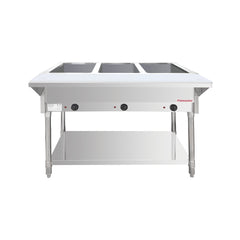 Flamaster FLM-ST3-SS Three Pan Open Well Electric Steam Table with Undershelf - 120V, 1500W
$899.00
-
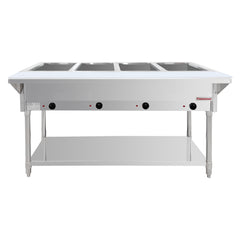 Flamaster FLM-ST4-SS Four Pan Open Well Electric Steam Table with Undershelf - 120V, 2000W
$1,099.00
-
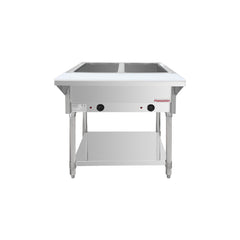 Flamaster FLM-ST2-SS Two Pan Open Well Electric Steam Table with Undershelf - 120V, 1000W
$799.00
-
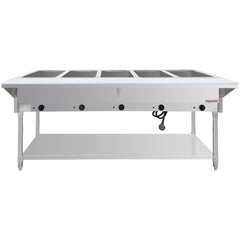 Flamaster FLM-ST5-SS Five Pan Open Well Electric Steam Table with Undershelf - 240V, 5000W
$1,299.00
-
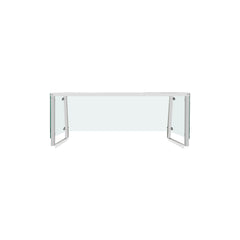 Flamaster FLM-ST3-OSG Trapezoid Sneeze Guard for 3-Pan Steam Table
$299.00
-
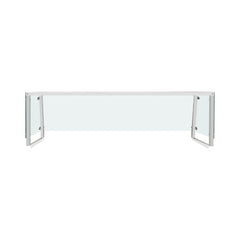 Flamaster FLM-ST4-OSG Trapezoid Sneeze Guard for 4-Pan Steam Table
$349.00


Flamaster
Flamaster FLM-ST2-SS Two Pan Open Well Electric Steam Table with Undershelf - 120V, 1000W
Sale price $799.00 Regular price $999.00Unit priceFree Shipping


Flamaster
Flamaster FLM-ST3-SS Three Pan Open Well Electric Steam Table with Undershelf - 120V, 1500W
Sale price $899.00 Regular price $1,099.00Unit priceFree Shipping


Flamaster
Flamaster FLM-ST4-SS Four Pan Open Well Electric Steam Table with Undershelf - 120V, 2000W
Sale price $1,099.00 Regular price $1,299.00Unit priceFree Shipping


Flamaster
Flamaster FLM-ST5-SS Five Pan Open Well Electric Steam Table with Undershelf - 240V, 5000W
Sale price $1,299.00 Regular price $1,599.00Unit priceFree Shipping

Flamaster
Flamaster FLM-ST4-OSG Trapezoid Sneeze Guard for 4-Pan Steam Table
Sale price $349.00 Regular price $399.00Unit priceFree Shipping

Flamaster
Flamaster FLM-ST5-OSG Trapezoid Sneeze Guard for 5-Pan Steam Table
Sale price $399.00 Regular price $499.00Unit priceFree Shipping
Flamaster
Flamaster FLM-ST2-OSG Trapezoid Sneeze Guard for 2-Pan Steam Table
Sale price $199.00 Regular price $240.00Unit priceFree Shipping
Flamaster
Flamaster FLM-ST3-OSG Trapezoid Sneeze Guard for 3-Pan Steam Table
Sale price $299.00 Regular price $359.00Unit price


Commercial Steam Table Buying Guide
A steam table is chosen on pan count and installed on the receptacle. Pan count is the easy part — count the dishes that have to be hot and open at once. The part that derails deliveries is that the plug changes three times across this four-model line, and not one of these units fits an ordinary wall outlet.
Pan count, and the 14-inch rule
Wells take the standard 12" × 20" full-size hotel pan, and on this line every extra pan adds exactly 14 inches of width: 2 pans = 30", 3 = 44", 4 = 58", 5 = 72". Depth and height never change (30 1/2" × 34 1/2"), so the models line up with each other and with a standard counter. Buy one well more than today's menu needs — it costs 14 inches.
The plug ladder — check this before you order
| Model | Pans | Width | Volts | Watts | Watts/well | Amps | Plug | Weight |
|---|---|---|---|---|---|---|---|---|
| FLM-ST2-SS | 2 | 30" | 120V | 1,000 | 500 | 8.33 A | 5-20P | 93 lb |
| FLM-ST3-SS | 3 | 44" | 120V | 1,500 | 500 | 12.5 A | 5-20P | 125 lb |
| FLM-ST4-SS | 4 | 58" | 120V | 2,000 | 500 | 16.67 A | 5-30P | 158 lb |
| FLM-ST5-SS | 5 | 72" | 240V | 5,000 | 1,000 | 20.83 A | 6-30P | 190 lb |
The ladder tracks the code rather than marketing. A steam table is a continuous load, so the circuit must be rated at 125% of running current: 12.5 A × 1.25 = 15.6 A (a 20 A circuit covers it), but 16.67 A × 1.25 = 20.8 A (it does not) — hence the 30 A receptacle on the four-pan. Five wells at full power would be 42 amps at 120 V, so the largest model moves to 240 V instead. Note also that a 5-20P plug does not fit a standard household 5-15R outlet; every model here needs a dedicated circuit with the matching receptacle installed before delivery.
The five-pan is not just bigger
The 2, 3 and 4 pan models all run 500 W per well. The 240 V five-pan runs 1,000 W per well — double the element behind every pan. That matters if you hold deep 6" pans of dense food or swap pans constantly on a busy line, where a well spends its day recovering from cold replacements.
Wet or dry
These are open well tables with 8" fiberglass insulation, and each well runs either way. Moist heat (an inch or two of water under the pan) transfers evenly, keeps product from drying or crusting, and recovers faster — the default for sauced dishes, vegetables, rice, stews and proteins. Dry heat reaches temperature faster and suits fried and breaded items that go soggy over steam, but heats less evenly and will scorch a pan left too long. Fill the well before switching it on, keep it topped up, and drain and wipe at close — scale insulates exactly where you need conduction.
135°F, and sneeze guards
The FDA Food Code sets hot holding at 135°F or above, measured in the food rather than the well, and a steam table holds — it does not cook or reheat: product goes in already hot. Where customers serve themselves or pass in front of open pans, a food shield is a code requirement, not an accessory. Each size has a matching trapezoid guard:
- FLM-ST2-OSG for the 2-pan · FLM-ST3-OSG for the 3-pan
- FLM-ST4-OSG for the 4-pan · FLM-ST5-OSG for the 5-pan
Splitting a well
One well takes a full-size pan, but adapter bars let you run two halves, three thirds or six sixths in the same opening — which is how a three-pan table serves nine items. Most lines run 4" pans for entrées and 2 1/2" for sides, with covers on anything not currently being served from.
Steam table pans → · Adapter bars → · Covers →
Read the full steam table buying guide →
Commercial steam table FAQ
What size steam table do I need?
Count the dishes that must be hot and open at the same time — that is your pan count. Width follows: every extra pan adds 14 inches, so 2 pans is 30", 3 is 44", 4 is 58" and 5 is 72". Two pans suits a soup-and-entree counter, three a cafe or deli hot bar, four and five a cafeteria or buffet line.
What outlet does a commercial steam table need?
Not a household one. The 2 and 3 pan models use a 5-20P plug on a 20 A circuit, the 4 pan needs a 5-30P on a 30 A circuit, and the 5 pan is 240 V with a 6-30P. A 5-20P will not fit a standard 5-15R receptacle, so the matching outlet has to be installed before delivery.
Why does the 4-pan need a 30 amp circuit?
Because a steam table is a continuous load and the code requires the circuit to be rated at 125% of running current. At 16.67 amps that works out to 20.8 amps, which a 20 A circuit does not cover, so the unit steps up to a 30 A receptacle.
Do you put water in a steam table?
Usually yes. Moist heat, with an inch or two of water in the well under the pan, transfers evenly, stops product drying out and recovers faster. Run dry only for fried and breaded items that go soggy over steam. Always fill before switching the well on, and never let it boil dry.
What temperature should a steam table hold?
135F or above for time/temperature control for safety food, per the FDA Food Code, measured in the food rather than in the well. Stir pans on a schedule and probe the centre — the top of an undisturbed pan reads much hotter than the middle.
Can a steam table reheat food?
No. It holds food that is already cooked and already hot. A well cannot bring a cold pan up through the danger zone in a safe amount of time, and using it that way is a violation rather than a shortcut.
Do I need a sneeze guard?
If customers serve themselves or pass in front of open pans, yes — a food shield is required for self-service displays in essentially every US jurisdiction. Each table size here has a matching trapezoid guard; order it with the table and confirm the height your health department expects.
Does a steam table need a hood?
Often not. It produces water vapour rather than grease-laden vapor, so it usually does not require a Type I grease hood, and many jurisdictions need either no hood or a Type II condensate hood. Confirm with your local authority using the model number before installation.