

Popular Products
-
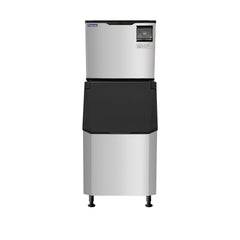 Polarman PLM-329 22" Air-Cooled Cube 350 lb Ice Machine with 275 lb Bin
$2,999.00
Polarman PLM-329 22" Air-Cooled Cube 350 lb Ice Machine with 275 lb Bin
$2,999.00
-
 Polarman PLM-529 30" Air-Cooled Cube 500 lb Ice Machine with 375 lb Bin
$3,299.00
Polarman PLM-529 30" Air-Cooled Cube 500 lb Ice Machine with 375 lb Bin
$3,299.00
-
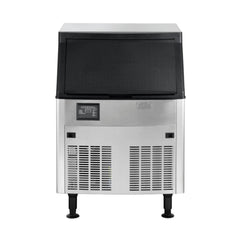 Polarman PLM-289S 26" Air-Cooled Cube 280 lb Undercounter Ice Machine with 80 lb Bin
$1,599.00
Polarman PLM-289S 26" Air-Cooled Cube 280 lb Undercounter Ice Machine with 80 lb Bin
$1,599.00
-
 Polarman PLM-129S 20" Air-Cooled Cube 120 lb Undercounter Ice Machine with 40 lb Bin
$1,339.00
Polarman PLM-129S 20" Air-Cooled Cube 120 lb Undercounter Ice Machine with 40 lb Bin
$1,339.00
-
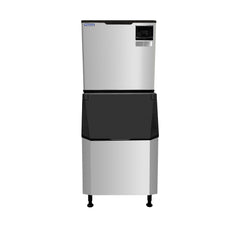 Polarman PLM-1029 30" Air-Cooled Cube 1000 lb Ice Machine with 440 lb Bin
$4,099.00
Polarman PLM-1029 30" Air-Cooled Cube 1000 lb Ice Machine with 440 lb Bin
$4,099.00


Polarman
Polarman PLM-129S 20" Air-Cooled Cube 120 lb Undercounter Ice Machine with 40 lb Bin
Sale price $1,339.00 Regular price $2,100.00Unit priceFree Shipping


Polarman
Polarman PLM-289S 26" Air-Cooled Cube 280 lb Undercounter Ice Machine with 80 lb Bin
Sale price $1,599.00 Regular price $2,500.00Unit priceFree Shipping


Polarman
Polarman PLM-329 22" Air-Cooled Cube 350 lb Ice Machine with 275 lb Bin
Sale price $2,999.00 Regular price $3,299.00Unit priceFree Shipping


Polarman
Polarman PLM-529 30" Air-Cooled Cube 500 lb Ice Machine with 375 lb Bin
Sale price $3,299.00 Regular price $3,999.00Unit priceFree Shipping
Ice-O-Matic
Ice-O-Matic UCG060A 15" Air Cooled Undercounter Gourmet Cube Ice Machine - 115V, 1 Phase, 63 lb.
Regular price $2,093.00Unit price
Ice-O-Matic
Ice-O-Matic UCG080A 18" Air Cooled Undercounter Gourmet Cube Ice Machine - 115V, 1 Phase, 99 lb.
Regular price $2,277.00Unit price
Ice-O-Matic
Ice-O-Matic UCG100A 18" Air Cooled Undercounter Gourmet Cube Ice Machine - 115V, 1 Phase, 119 lb.
Regular price $2,565.00Unit price
Ice-O-Matic
Ice-O-Matic UCG130A 18" Air Cooled Undercounter Gourmet Cube Ice Machine - 115V, 1 Phase, 126 lb.
Regular price $2,749.00Unit price


Hoshizaki
Regular price $3,320.00Unit price


Hoshizaki
Regular price $3,320.00Unit price


Hoshizaki
Hoshizaki KM-231BAJ 24" Air Cooled Undercounter Crescent Cube Ice Machine with Bin - 213 lb.
Regular price $3,595.00Unit price


Hoshizaki
Hoshizaki KM-301BAJ 30" Air Cooled Undercounter Crescent Cube Ice Machine with Bin - 290 lb.
Regular price $4,200.00Unit price


Hoshizaki
Regular price $6,090.00Unit price


Hoshizaki
Regular price $6,705.00Unit price

Hoshizaki
Regular price $8,765.00Unit price


Hoshizaki
Hoshizaki KMD-505MAJ 30" Air Cooled Modular Crescent Cube Ice Machine - 115V,500 lb.
Regular price $4,520.00Unit priceFree Shipping


Hoshizaki
Hoshizaki B-250SF 30" Stainless Steel Ice Storage Bin - 250 lbs
Regular price $1,510.00Unit price
Hoshizaki
Hoshizaki B-300SF 22" Stainless Steel Ice Storage Bin - 300 lbs
Regular price $1,555.00Unit price
Hoshizaki
Hoshizaki B-500SF 30" Stainless Steel Ice Storage Bin - 500 lbs
Regular price $1,725.00Unit price


Polarman
Polarman PLM-1029 30" Air-Cooled Cube 1000 lb Ice Machine with 440 lb Bin
Sale price $4,099.00 Regular price $5,000.00Unit priceFree Shipping


Commercial Ice Machine Buying Guide
Undercounter ice machines
Icemaker, condenser and storage bin in one cabinet, 15–30" wide and built to slide under a standard 36" counter. The right answer when the ice has to be where it is poured — behind the bar, at the espresso station, at the drive-through window. Our Polarman undercounter units are rated 120 lb and 280 lb a day with 40 lb and 80 lb bins. Shop undercounter ice machines →
Modular heads and storage bins
A production head sitting on a separate bin, 22" or 30" wide. You size production and storage independently, and replace either one on its own. This is the answer above about 280 lb a day, and usually below it too if there is a back-of-house home for the machine. Polarman heads run 350, 500 and 1000 lb a day, each on a matched bin. Shop modular ice machines →
How to choose a commercial ice machine
- Size off the 90°/70° number, not the headline. Every machine is rated at two conditions. The big number on a product page — ours included — is 70°F air / 50°F water, an ideal maximum. The AHRI figure at 90°F air / 70°F water is what a working kitchen in summer actually gets.
- Estimate demand, then measure it. Start from a planning figure — roughly 1.5 lb per cover in a full-service restaurant, 3 lb per bar seat on a busy night, 0.35–0.6 lb per iced drink in a café, about 5 lb per occupied hotel room. Then empty the bin at close on a Friday and see what is left after the next service.
- Buy bin capacity for the rush. A 500 lb machine makes about 20 lb an hour, so it contributes only about 80 lb during a four-hour service. Everything else has to already be in the bin.
- Undercounter for placement, modular for volume. Many bars end up with both — a head in back and a small unit at the service well.
- Check the circuit and the drain before you order. Every Polarman up to 500 lb a day is 115 V; the 1000 lb PLM-1029 needs 220 V. Modular bins need their own gravity drain with an air gap.
- Fit a scale filter at install. Ice machines fail on water first. A filter is the difference between cleaning twice a year and cleaning every six weeks. Full commercial ice machine buying guide →
Rated capacity vs real capacity
Every machine is rated at two conditions and manufacturers publish both: 70°F air / 50°F water, the ideal maximum, and 90°F air / 70°F water, the AHRI condition that stands in for a working kitchen in summer. The headline figure on a product page — ours included — is almost always the 70°/50° one.
Across the published specification sheets for cube machines in this class the pattern is consistent: a modular head loses about 14% between the two conditions, and a self-contained undercounter unit loses 25–31%. The reason is structural rather than a matter of build quality — an undercounter unit has the icemaker, condenser and bin packed into one boxed-in cabinet, rejecting heat into a space that is already warm, while a modular head sits in open air with a clear path across the condenser.
Rule of thumb: from a single published figure, expect about 85% of it from a modular head and about 70–75% from an undercounter unit in a real kitchen.
Sizing by business
Peak-day demand below is real ice out of the machine, so the ratings are already derated.
| Peak-day demand | Typical business | What to buy |
|---|---|---|
| Under 90 lb | Small café, one service well | PLM-129S — 120 lb rated, 40 lb bin |
| 90–200 lb | Busy coffee shop, small bar | PLM-289S — 280 lb rated, 80 lb bin |
| 200–300 lb | Full-service restaurant, mid-size bar | PLM-329 — 350 lb rated, 275 lb bin |
| 300–430 lb | High-volume restaurant, hotel, banquet | PLM-529 — 500 lb rated, 375 lb bin |
| 430–860 lb | Hotel, healthcare, production kitchen | PLM-1029 — 1000 lb rated, 440 lb bin, 220 V |
| Above 860 lb | Multi-outlet, large hotel | Two machines — splits front and back of house, and keeps you open when one is down |
Polarman ice machines at a glance
All air-cooled, all on R290, all shipped with a matched bin. Figures at the 70°/50° condition — apply the derate above when you size.
| Model | Style | Ice / 24 hr | Bin | W × D × H | Electrical |
|---|---|---|---|---|---|
| PLM-129S | Undercounter | 120 lb | 40 lb | 19 7/10" × 23 1/5" × 35 2/5" | 115 V, 3.5 A |
| PLM-289S | Undercounter | 280 lb | 80 lb | 26" × 27" × 38 1/5" | 115 V, 8.6 A |
| PLM-329 | Head + bin | 350 lb | 275 lb | 22" × 33 4/5" × 67 7/10" | 115 V, 8.51 A |
| PLM-529 | Head + bin | 500 lb | 375 lb | 30" × 33 4/5" × 68 7/10" | 115 V, 11.26 A |
| PLM-1029 | Head + bin | 1000 lb | 440 lb | 30" × 33 4/5" × 75 3/5" | 220 V, 10 A |
Every Polarman machine carries 1 year labour, 2 years parts and 5 years on the compressor part.
Commercial ice machine FAQ
How do I size a commercial ice machine?
Start with a planning figure for your business type — about 1.5 lb per customer in a full-service restaurant on the peak day, 0.5–1.0 lb per customer in quick service, about 3 lb per seat in a bar on a busy night, 0.35–0.6 lb per iced beverage in a café, about 5 lb per occupied hotel room, 7–10 lb per occupied bed in healthcare. Then measure it: empty the bin at close, run overnight, and check what is left after the next service on a Friday and a Saturday. Size the machine off the 90°F/70°F rating, not the headline number, and make sure the bin covers your peak-period draw.
Why does my ice machine make less ice than the rating says?
Because the headline rating is measured at 70°F air and 50°F water — an ideal condition, not a kitchen. The second published figure, at 90°F air and 70°F water, is the AHRI rating and it is much closer to real service. Across published specs for machines in this class the gap is about 14% on a modular head and 25–31% on a self-contained undercounter unit. A blocked condenser, a dirty air filter or no clearance around the intake makes it worse still.
What is the difference between an undercounter and a modular ice machine?
An undercounter machine has the icemaker, condenser and storage bin in one cabinet that fits under a 36" counter — convenient placement, small bin, and a steeper capacity loss in a hot room. A modular machine is a production head on a separate bin, so you choose production and storage independently, replace either one on its own, and get much larger capacities. Our undercounter units run to 280 lb a day; the modular heads run to 1000 lb.
Do you sell nugget or flake ice machines?
Our own Polarman line makes hard cube ice, air-cooled, from 120 to 1000 lb a day. We do not build nugget or flake machines. Nugget is common in healthcare and soda programs and flake is used for seafood and produce display — both are real commercial requirements, and we would rather say so than sell you a cuber that does not suit the job.
How often does a commercial ice machine need cleaning?
Manufacturer installation manuals in this class specify that the appliance must be cleaned and sanitized at least once a year, and more often in some water conditions, with the air filter inspected every two weeks and washed with warm water and a neutral cleaner when dirty. Hard water, a greasy or flour-heavy room, or any drop in production or change in cube appearance all push the interval shorter. Cleaning and sanitizing are two separate steps with two different chemicals.
Does an ice machine need a dedicated circuit and a drain?
Yes to both. The compressor cycles continuously, so the machine belongs on its own circuit sized to its nameplate at the code-required margin — not shared with the espresso machine. It also needs a cold potable water supply and a gravity drain with an air gap, and a modular bin needs its own separate drain. Every Polarman up to 500 lb a day is 115 V; the 1000 lb PLM-1029 is 220 V.
Air-cooled or water-cooled?
Air-cooled for the large majority of operations, and every Polarman machine is air-cooled. It uses no water beyond what goes into the ice, but it needs room air and the clearance the manual specifies — the published normal operating range for this class is 45°F to 100°F ambient. Water-cooled only makes sense in a genuinely hot enclosed room where an air-cooled unit cannot reject heat, or where the load on the building's air conditioning matters more than the water bill. Some jurisdictions restrict single-pass water-cooled machines.