

Popular Products
-
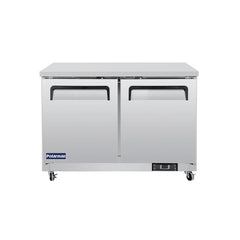 Polarman PLM-UC-48S 48 1/4" Undercounter Refrigerator, 12 cu. ft, Stainless Steel, 2 Solid Doors
$1,599.00
-
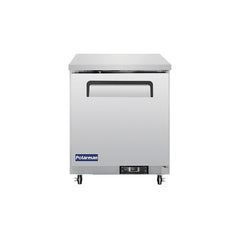 Polarman PLM-UC-27S 27 3/4" Undercounter Refrigerator, 6.5 cu. ft, Stainless Steel, 1 Solid Door
$1,099.00
-
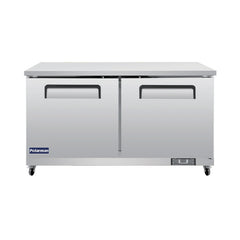 Polarman PLM-UC-60S 61 1/4" Undercounter Refrigerator, 15.5 cu. ft, Stainless Steel, 2 Solid Doors
$1,699.00
-
Polarman PLM-UC-48FS 48 1/4" Undercounter Freezer, 12 cu. ft, Stainless Steel, 2 Solid Doors
$1,699.00
-
Polarman PLM-UC-27FS 27 3/4" Undercounter Freezer, 6.5 cu. ft, Stainless Steel, 1 Solid Door
$1,199.00
-
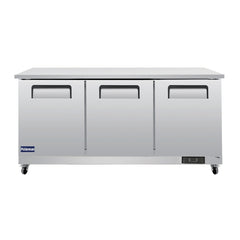 Polarman PLM-UC-72S 71 3/4" Undercounter Refrigerator, 18 cu. ft, Stainless Steel, 3 Solid Doors
$2,349.00


True
True TWT-48D-2-HC 48 3/8" Worktop Refrigerator with 2 Drawers
Regular price $5,820.07Unit price

True
True TWT-67D-2-HC 67 1/4" Worktop Refrigerator with 2 Drawers
Regular price $6,497.30Unit price
True
True TWT-67D-4-HC 67 1/4" Worktop Refrigerator with 4 Drawers
Regular price $7,914.92Unit price


True
True TWT-93D-2-HC 93 1/4" Worktop Refrigerator with 2 Drawers
Regular price $8,292.97Unit price
True
True TWT-93D-4-HC 93 1/4" Worktop Refrigerator with 4 Drawers
Regular price $9,710.29Unit price
True
True TWT-93D-6-HC 93 1/4" Worktop Refrigerator with 6 Drawers
Regular price $11,127.91Unit price


Commercial Undercounter Refrigeration Buying Guide
Undercounter refrigerators
A refrigerated cabinet 35 1/2" tall, built to tuck under an existing 36" counter. The top is under something, not worked on. Our Polarman line runs 27 3/4" to 71 3/4" wide, 6.5 to 18 cu ft, all on 115 V. Shop undercounter refrigerators →
Undercounter freezers
The same cabinet and the same capacity at each width, holding -10°F to 10°F instead of 33–41°F. More insulation and a bigger compressor, so 10 to 30 lb heavier — but you give up no volume choosing frozen over chilled. Shop undercounter freezers →
Worktop refrigerators and freezers
A few inches taller, with a reinforced stainless top and usually a backsplash, because the top is the work surface. A commercial worktop refrigerator replaces a length of prep table rather than hiding under one — the right choice when you are building the line rather than filling a gap in it. Shop worktop refrigerators →
Chef bases
Shorter again, with a heavy marine-edge top built to carry a countertop griddle, charbroiler or fryer battery, and refrigerated drawers underneath. A chef base refrigerator turns dead space under the cookline into cold storage exactly where the cook reaches. Polarman chef bases run 37 15/16", 50", 62" and 74".
How to choose a commercial undercounter refrigerator
- Check fit before capacity. Our whole line is 35 1/2" tall and 29 15/16" deep. Under a 36" counter that is half an inch of clearance — measure the finished underside of your counter, not the nominal height.
- Check the door swing, not just the cabinet. A solid door on a 27" cabinet swings most of the cabinet width into the aisle. In a galley kitchen that decides the unit, not the wall.
- Read capacity per inch of line. Kitchen line is the scarce resource, and the sizes are not equally efficient — see the table below.
- Set it in the middle of the range. 41°F is the FDA Food Code cold-holding limit, so a cabinet running at the top of its range has no headroom. Set 36–38°F and keep a thermometer inside the cabinet, not on the display.
- Leave air behind it. Our compressors are rear-mounted, which keeps them out of the grease at floor level but means the cabinet cannot sit flat against a wall.
- Doors or drawers. Drawers cost more and lose a little volume, but at a station where a cook works continuously they pay for themselves in motion. Full undercounter buying guide →
Capacity per inch of line
The useful question is not how many cubic feet a cabinet holds but how many cubic feet each inch of line buys. Run our own refrigerator line through it and one size stands out — in the wrong direction.
| Model | Width | Capacity | Cu ft per inch | Step up from the previous size |
|---|---|---|---|---|
| PLM-UC-27S | 27 3/4" | 6.5 cu ft | 0.23 | — |
| PLM-UC-36S | 36 7/16" | 7.7 cu ft | 0.21 | +8 11/16" for +1.2 cu ft (+18%) |
| PLM-UC-48S | 48 1/4" | 12 cu ft | 0.25 | +11 13/16" for +4.3 cu ft (+56%) |
| PLM-UC-60S | 61 1/4" | 15.5 cu ft | 0.25 | +13" for +3.5 cu ft (+29%) |
| PLM-UC-72S | 71 3/4" | 18 cu ft | 0.25 | +10 1/2" for +2.5 cu ft (+16%) |
The 36" is the only size that gives you less per inch than the 27" does — it is a two-door cabinet in a narrow body, so a centre mullion and a second door frame eat most of the extra width. Buy it when you have a 36" hole and nothing else fits. Otherwise the 27 and the 48 are the value points, and 27 → 48 is the best step in the line.
Polarman undercounter range
All 115 V / 60 Hz / single phase, R290, stainless inside and out, rear-mounted compressor, four casters with two brakes, adjustable PVC-coated wire shelves rated 88 lb. Same 29 15/16" depth and 35 1/2" height across every model.
| Model | Type | Width | Doors | Capacity | Weight |
|---|---|---|---|---|---|
| PLM-UC-27S | Refrigerator | 27 3/4" | 1 solid | 6.5 cu ft | 199 lb |
| PLM-UC-36S | Refrigerator | 36 7/16" | 2 solid | 7.7 cu ft | 245 lb |
| PLM-UC-48S | Refrigerator | 48 1/4" | 2 solid | 12 cu ft | 280 lb |
| PLM-UC-60S | Refrigerator | 61 1/4" | 2 solid | 15.5 cu ft | 331 lb |
| PLM-UC-72S | Refrigerator | 71 3/4" | 3 solid | 18 cu ft | 380 lb |
| PLM-UC-27FS | Freezer | 27 3/4" | 1 solid | 6.5 cu ft | 210 lb |
| PLM-UC-36FS | Freezer | 36 7/16" | 2 solid | 7.7 cu ft | 273 lb |
| PLM-UC-48FS | Freezer | 48 1/4" | 2 solid | 12 cu ft | 302 lb |
| PLM-UC-60FS | Freezer | 61 1/4" | 2 solid | 15.5 cu ft | 353 lb |
| PLM-UC-72FS | Freezer | 71 3/4" | 3 solid | 18 cu ft | 386 lb |
Refrigerators hold 33–41°F, freezers -10°F to 10°F. Every unit carries 1 year labour, 2 years parts and 5 years on the compressor part.
Commercial undercounter refrigerator FAQ
What is the difference between a commercial and a residential undercounter refrigerator?
They share a name and almost nothing else. A commercial unit is NSF listed for sanitation — coved corners, removable gaskets, cleanable surfaces — and built to hold temperature with the door opening dozens of times an hour in a kitchen sitting at 85–95°F. It is stainless inside and out and rides on casters so it can be pulled for cleaning. A residential undercounter is built for a quiet 70°F kitchen; in a food-service kitchen it fails early and, in most jurisdictions, fails inspection. Price is not a reliable signal — some residential units cost more.
What size undercounter refrigerator do I need?
Start from the line you have, not the capacity you want. One station and one cook is a 27 3/4" cabinet at 6.5 cu ft. A real cookline station or a bar with volume is the 48 1/4" at 12 cu ft, which is the best value in the line. A long run under a continuous counter takes the 61 1/4" or 71 3/4" at 15.5 and 18 cu ft. Where the stations are apart, two small cabinets usually beat one large one — cold storage is worth most at the station that uses it, and two machines mean you are never fully down.
Will an undercounter refrigerator fit under my counter?
Our line is 35 1/2" tall and 29 15/16" deep, so it fits a standard 36" counter and a 30" equipment line — with half an inch of height clearance. Counters are not always built to nominal height, so measure the finished underside rather than trusting the drawing. Check the door swing against the opposite line too: a solid door on a 27" cabinet swings most of the cabinet width into the aisle.
What is the difference between an undercounter, a worktop and a chef base?
It is what the top is for. An undercounter is 35 1/2" tall and goes under an existing counter; the top is not a work surface. A worktop is a few inches taller with a reinforced stainless top and usually a backsplash, so it replaces a length of prep table. A chef base is shorter with a heavy marine-edge top built to carry a countertop griddle, charbroiler or fryer, with refrigerated drawers below. Counter already there, buy undercounter; building the counter, buy worktop; something hot going on top, buy a chef base.
How cold does a commercial undercounter refrigerator get?
Ours hold 33–41°F. That top figure matters: the FDA Food Code sets 41°F as the maximum cold-holding temperature for time/temperature control for safety foods, so a cabinet running at the top of its range is at the legal limit with no headroom. Set it to 36–38°F, which leaves you something to lose on a hot Saturday, and keep a thermometer in the cabinet rather than trusting the digital readout, which is measuring return air. Our freezers hold -10°F to 10°F, with 0°F the conventional target.
Do undercounter refrigerators need a special electrical circuit?
No. Every Polarman undercounter refrigerator and freezer runs on standard 115 V, single phase, 60 Hz. Size the branch circuit off the amp draw on the machine's data plate at the margin your local code requires — not off a web listing, ours included.
Should I buy solid doors or drawers?
Solid doors are cheaper, seal better and hold temperature best. Drawers cost more and lose a little capacity to the drawer boxes, but a cook can pull one with one hand instead of bending and searching a shelf — at a sauté or grill station where someone works continuously, that motion saving usually pays for the difference. Glass doors belong front of house: glass is a far worse insulator than a foamed solid door, and under a hot cookline the unit works harder for the same temperature.