
Popular Products


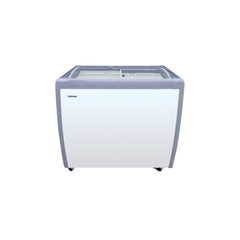


Polarman
Polarman PLM-S260FG 40" Ice Cream Dipping Cabinet
Sale price $999.00 Regular price $1,200.00Unit priceFree Shipping


Polarman
Polarman PLM-S360FG 49 3/5" Ice Cream Dipping Cabinet
Sale price $1,099.00 Regular price $1,400.00Unit priceFree Shipping


Polarman
Polarman PLM-S460FG 60" Ice Cream Dipping Cabinet
Sale price $1,199.00 Regular price $1,500.00Unit priceFree Shipping


Polarman
Polarman PLM-S460FGS 60" Ice Cream Dipping Cabinet with Flat Sneeze Guard
Sale price $1,898.00 Regular price $2,300.00Unit priceFree Shipping


Ice Cream Dipping Cabinet Buying Guide
A dipping cabinet is the freezer you scoop out of. The well opens toward the operator, the curved glass faces the customer, and the cabinet holds -8°F to -4°F — the temperature at which ice cream and gelato stay firm on display and still portion cleanly with a warm scoop. It is the counter machine for a scooping shop, a gelateria, or any operation that sells by the cone rather than by the tub.
Dipping cabinet or display freezer?
Externally they can look similar, and they hold the same temperature. The difference is who opens the lid and what happens to the space inside.
- A display freezer has a full sliding top, so the customer reaches down and lifts out a packaged product. It is a merchandiser.
- A dipping cabinet gives that space over to a service well sized for tubs that stay in place while staff scoop. The glass is for looking, not for reaching.
That service well costs volume. On the same cabinet body, a dipping cabinet holds 19 to 24% less than the equivalent display freezer — our 40" display holds 7.4 cu ft where the 40" dipping cabinet holds 6.0, and at 60" it is 13.1 against 10.0. That is not a worse cabinet; it is what buying a working service position rather than storage costs.
The Polarman dipping cabinet line
All models are 115 V single phase, R290, bottom-mounted compressor, 3.5 A, 28" deep and 34 1/2" tall — counter height, so they drop into a service line without a step.
| Model | Width | Capacity | Cu ft per inch | Sneeze guard | Weight |
|---|---|---|---|---|---|
| PLM-S260FG | 40" | 6 cu ft | 0.150 | — | 128 lb |
| PLM-S360FG | 49 3/5" | 8 cu ft | 0.161 | — | 170 lb |
| PLM-S460FG | 60" | 10 cu ft | 0.167 | — | 174 lb |
| PLM-S460FGS | 60" | 10 cu ft | 0.167 | Flat sneeze guard | 258 lb |
The line gets slightly more efficient as it gets wider, but the differences are small — unlike a display freezer line, a dipping cabinet is sized by how many flavours you need in the window, not by cubic feet. Count the flavour list you intend to hold and buy the width that fits it, then check the capacity as a sanity check rather than as the decision.
The sneeze guard version
The PLM-S460FGS is the same 60" cabinet, the same 10 cu ft and the same 3.5 A as the PLM-S460FG, with a flat sneeze guard added — and it weighs 258 lb against 174. That 84 lb is all glass and frame. Two consequences worth planning for: it needs a solid floor position and a proper delivery plan, and it is not a piece you reposition casually once it is set. Order it when the counter is genuinely self-serve or open to the customer, or when your health jurisdiction requires a guard over open product — requirements vary by state and county, so check yours rather than assuming.
Read next
- Commercial ice cream freezer buying guide — every chest and dipping model, lid styles and sizing.
- Commercial display freezer buying guide — chest, dipping and upright compared on temperature and floor space.
- Commercial ice cream freezers — same temperature range, full sliding top, for packaged product the customer takes.
- All commercial display freezers — chest, dipping and upright glass door cabinets together.
Ice cream dipping cabinet FAQ
What is an ice cream dipping cabinet?
It is a counter-height freezer built to be scooped from. The well opens to the operator's side and holds tubs in place while staff portion out of them; the curved glass front lets the customer see the flavours without reaching in. It runs at -8°F to -4°F, which keeps product firm enough to hold shape on display and soft enough to scoop cleanly. The name comes from dipping the scoop, and in the trade it is also called a dipping freezer or a gelato cabinet.
What is the difference between a dipping cabinet and a display freezer?
Who opens it, and what the interior is shaped for. A display freezer is a merchandiser with a full sliding top, so the customer reaches down and lifts out packaged product. A dipping cabinet gives that space over to a service well for tubs that stay put while staff scoop, and the glass is for looking rather than reaching. They hold the same temperature. On identical cabinet bodies the dipping version holds 19 to 24% less — 6.0 cu ft against 7.4 at 40 inches, 10.0 against 13.1 at 60 — because the service well takes the difference.
What size dipping cabinet do I need?
Size by flavour count, not cubic feet. A dipping cabinet's job is to keep a set number of tubs in the window and reachable; volume beyond that does nothing for service speed. Our line runs 40, 49 3/5 and 60 inches wide. Work out the flavour list you intend to carry at peak, add the ones you rotate, and buy the width that holds them — then use capacity as a sanity check rather than as the decision.
Do I need a sneeze guard?
It depends on your jurisdiction and your counter layout. Requirements for a guard over open product vary by state and county, so check locally rather than assuming. As a rule, the more self-serve the counter and the more open it is to customers leaning over it, the more likely a guard is required. Our PLM-S460FGS is the guarded version of the 60 inch cabinet, with the same 10 cu ft and the same 3.5 A draw.
Does the sneeze guard cost me capacity?
No. The PLM-S460FGS holds the same 10 cu ft in the same 60 inch cabinet as the unguarded PLM-S460FG. What it costs is weight: 258 lb against 174, so 84 lb of glass and frame. Plan the delivery and the final position accordingly — it is not a cabinet you shift around the counter afterwards.
Is a dipping cabinet the same as a gelato display case?
Often people mean the same thing, but not always. "Gelato display case" is sometimes used for an upright refrigerated showcase with a sloped glass front and forced-air cooling, which is a different and considerably more expensive machine. A dipping cabinet is the counter-height well version: simpler, quieter, cheaper to run, and perfectly capable of holding gelato at serving temperature. If what you want is flavours in a window that staff scoop from, this is the category.
What power does a dipping cabinet need?
Every model in this line is 115 V single phase drawing 3.5 A on R290, so an ordinary wall circuit is enough. Give it a dependable dedicated outlet rather than a strip shared with a POS terminal and a blender, and keep the front base clear — the compressor is bottom-mounted and breathes at the front, so a cabinet boxed in by stock or pushed tight to a corner will drift warm through the afternoon.